
Our Sustainability Metrics
Baseline Sustainable Literacy Assessment
Lac Hong University (LHU) has developed an
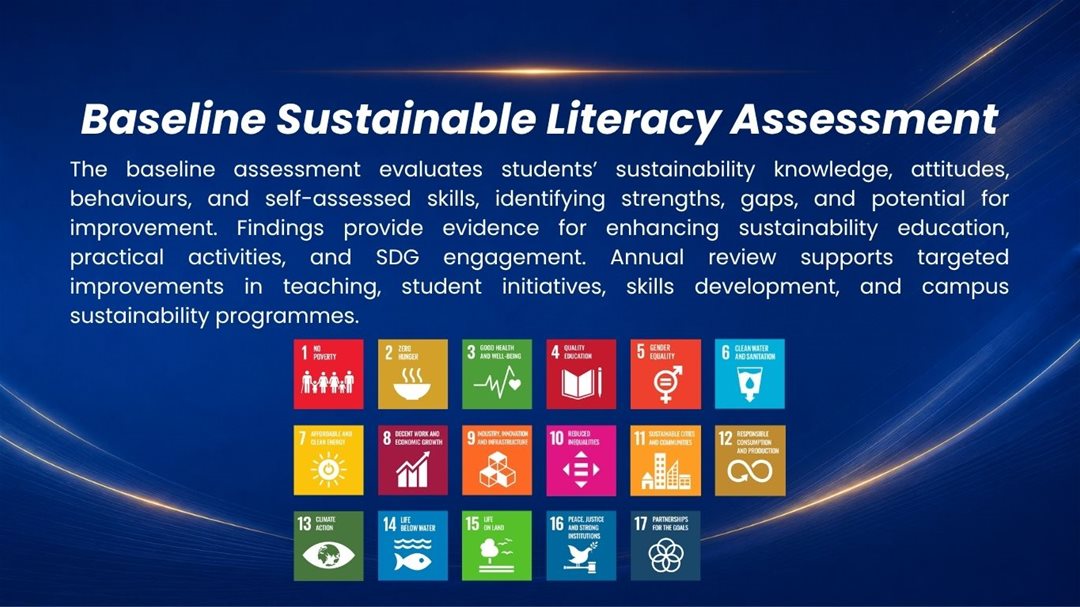
assessment to evaluate sustainability knowledge, attitudes, self-assessed skills and behaviours among its students.
This assessment uses multiple-choice questions and Likert scales and consists of six sections:
-
Section A: Demographic Information (6 items)
-
Section B: Sustainability Knowledge (13 items)
-
Section C: Sustainability Attitude (11 items)
-
Section D: Sustainability Behaviour (15 items, including 1 optional open-ended item)
-
Section E: Self-Assessed Sustainability Skills (6 items)
-
Section F: Suggestions for SDG Competitions and Activities (5 items)
1. Introduction
This assessment examines sustainability knowledge, attitudes, self-assessed skills and behaviours among undergraduate and postgraduate students at Lac Hong University (LHU). It serves as a baseline assessment to support educational improvement, student engagement and sustainability initiatives across the University.
2. Participants
The survey involves undergraduate and postgraduate students at LHU from different fields of study, academic years, age groups and backgrounds.
In [year], a total of [___] respondents participated in the assessment, representing [___]% of the total student population at LHU.
3. Research Instrument
The assessment uses a structured questionnaire covering six areas: demographics, sustainability knowledge, sustainability attitudes, sustainability behaviours, self-assessed sustainability skills, and preferences for SDG-related competitions and activities.
Knowledge is assessed through multiple-choice questions, while attitudes, behaviours and sustainability skills are measured using Likert scales. The instrument has been adapted to the context of LHU, Vietnam and Southeast Asia, with the sustainability skills section informed by relevant UNESCO sustainability competencies.
4. Key Findings
-
Sustainability Knowledge
-
[___]% of respondents demonstrated [___] levels of sustainability knowledge, with key strengths and knowledge gaps identified in [___].
-
-
Sustainability Attitudes
-
[___]% of respondents demonstrated positive attitudes toward sustainability, particularly in [___].
-
-
Sustainability Behaviours
-
[___]% of respondents reported regularly engaging in sustainability-related behaviours, including [___].
-
-
Sustainability Skills
-
[___]% of respondents reported being able to apply sustainability-related skills independently or with limited support. Key strengths included [___].
-
-
SDG Engagement
-
The most preferred SDG-related themes and activities were [___], while the main forms of support requested by students were [___].
-
5. Initiatives and Way Forward
Based on the assessment results, LHU can strengthen sustainability literacy through:
-
Knowledge – targeted sustainability education and awareness activities addressing identified knowledge gaps.
-
Attitudes – integration of sustainability, social responsibility and global citizenship into academic and student activities.
-
Behaviours – practical initiatives such as waste reduction, energy saving, recycling, green campus activities and community projects.
-
Skills – project-based learning and activities that strengthen critical thinking, collaboration, problem-solving and impact monitoring.
-
SDG Engagement – student competitions, research, projects, hackathons and community initiatives aligned with the United Nations Sustainable Development Goals (SDGs).
The results are reviewed annually by the Department of Testing and Quality Assurance and the Department of Academic Affairs of Lac Hong University to inform teaching approaches, student engagement strategies and campus sustainability programs.
6. Conclusion
The assessment provides baseline data on sustainability knowledge, attitudes, behaviours and self-assessed skills among LHU students. The findings help identify strengths, gaps and opportunities for strengthening sustainability education and engagement across the University.
This initiative reflects LHU’s commitment to developing sustainability-literate graduates equipped with the knowledge, skills and behaviours needed to contribute to sustainable development in their communities and beyond.
